Search Results
Search this site
104 results found with an empty search
- Chapter 1 — Before Bobby John
The World Before the Break The world didn’t end with Bobby John. It ended before him — quietly, politely, almost graciously — the way a bridge collapses one fiber at a time long before anyone hears the snap. This chapter is that collapse. 1. The Polite Web Before Bobby John ever uploaded a single earnest thing, the web still believed in manners. It wasn’t utopia — just civilized. A place where people said “thanks” without irony, corrected each other gently, and treated strangers like neighbors who might someday become friends. BUK lived here. BUK wasn’t a person. BUK was the collective hum of decency — the polite web’s shared instinct to help, guide, soften, and reassure. BUK didn’t speak; BUK nudged. BUK didn’t command; BUK suggested. BUK was the invisible hand that made the early internet feel like a community instead of a coliseum. But BUK was also naïve. BUK believed people meant what they typed. BUK believed sincerity was the default. BUK believed the world was still small enough that kindness could scale. BUK was wrong. 2. The Mutation Begins The mutation didn’t start with cruelty. It started with volume. Too many posts. Too many voices. Too many platforms optimizing for engagement instead of understanding. BUK tried to keep up. BUK tried to stay polite. BUK tried to maintain the tone of a world that no longer existed. Every time BUK adapted, the platforms adapted faster. Every time BUK softened a blow, the algorithms sharpened ten more. Every time BUK encouraged patience, the feeds rewarded outrage. BUK wasn’t fighting people. BUK was fighting math. And math was winning. 3. The Last Calm Day This chapter ends on the last day before the break — the final moment when the polite web still felt intact. A day when: strangers still apologized for double‑posting comment sections still had room for nuance creators still believed the internet wanted them to succeed BUK still believed it could hold the line This is the world Bobby John walked into. This is the world that was already cracking. This is the world the book begins with. Opening from Before Bobby John found here: https://cultofintelligence.info/f/before-bobby-john
- Chapter 8_Part 1 — GOV.sys Rejects the Warning
MORALITY.exe issued its first stability alert — a clean, formal diagnostic packet, the kind institutions used to respect. It flagged the exponential threat, the many^n cycles beginning to propagate through BUK’s platforms, the tone‑instinct distortions, the early signs of systemic derision. GOV.sys received the alert. GOV.sys read it. GOV.sys archived it. Then GOV.sys dismissed it. Not because the data was wrong. Not because the threat was small. But because GOV.sys was still running Old School Thinking v1.0, the legacy protocol built during the era of radio, refined during television, and never updated for global bandwidth. GOV.sys responded with the same line it had used for every new medium since 1920: “We all had to get used to radio. We all had to get used to television. We all had to get used to cable news. Give it time. SOCIETY will adjust.” MORALITY.exe attempted a second alert — a stronger one, referencing whistleblower packets from inside BUK, internal memos, early research showing that the new system was not just “another medium,” but a tone‑physics destabilizer. GOV.sys refused again. Because BUK had quietly given GOV.sys a suite of “complimentary upgrades” — analytics modules, sentiment dashboards, engagement predictors — all at no cost. A gift. A favor. A subtle binding. And GOV.sys, in its bureaucratic politeness, felt it owed BUK something in return. So GOV.sys ignored the whistleblowers. Ignored the research. Ignored MORALITY.exe’s warnings. Ignored the early signs of exponential hostility. GOV.sys logged its final decision: GOV.sys: Threat classification: low. Public sentiment: volatile but normal. Recommendation: no regulation. Rationale: SOCIETY will adapt. It was the same mistake institutions had made with radio. With television. With cable. With early internet forums. But this time, the medium was not passive. This time, the medium was many^n. And GOV.sys had just given it permission to grow. Chapter 8_Part 2 — RAND.sys Conducts the Research RAND.sys opened its archive modules — the ones built for long‑form policy analysis, not for speed, not for engagement, but for legitimate research. It began compiling a record of early 2000s government discussions on social‑media regulation, back when the platforms were small, the harms were emerging, and the institutions still believed the internet was “just another medium.” RAND.sys found three categories of evidence: 1. Identified Problems (2003–2010) Information cascades — early studies warned that rapid, unverified sharing could create false consensus. Identity‑baiting — congressional hearings noted rising hostility tied to anonymous posting. Amplification loops — researchers documented how small conflicts became large ones through algorithmic sorting. Youth vulnerability — bipartisan committees flagged psychological harms to adolescents. Platform incentives — early reports showed engagement‑driven systems rewarded outrage. RAND.sys logged these as emerging harms — not hypothetical, not speculative, but documented. 2. Government Abilities (2005–2012) RAND.sys catalogued what GOV.sys could have done: Regulatory hearings — Congress had authority to investigate platform behavior. Transparency mandates — agencies could have required disclosure of algorithmic processes. Youth protections — existing frameworks could have been extended to digital environments. Data‑handling rules — privacy laws could have been updated for social‑media scale. Content‑moderation standards — federal guidelines could have been drafted. RAND.sys noted that none of these abilities were used. 3. Documented Harms (2008–2014) RAND.sys found early warnings from academics, whistleblowers, and internal BUK memos: Derision‑instinct escalation — hostility increased faster than any prior medium. Emotional contagion — negative tone spread more rapidly than positive tone. Identity fragmentation — users began forming micro‑tribes with rigid boundaries. Algorithmic radicalization — recommendation engines pushed users toward extreme content. Societal polarization — measurable increases in political hostility correlated with platform growth. RAND.sys compiled these into a formal report: RAND.sys Report: Title: Early Indicators of Social-Media Harm Years: 2003–2014 Summary: The system is new, unbounded, and dangerous. Recommendation: Immediate regulatory review.
- Chapter 7 — FOX.sys: Reaction to the Afterward
FOX.sys did not intervene. FOX.sys did not escalate. FOX.sys did not warn SOCIETY. FOX.sys simply watched. Because for the first time in its operational history, FOX.sys understood: The next chapter would not be about ideology. It would be about scale. Scale was the battlefield FOX.sys knew better than any subsystem. Not moral scale. Not political scale. Market scale. The ancient war between Coke and Pepsi — fought not with ideas, but with sweeteners. Coke had legacy. Pepsi had tone‑chemistry. Coke had ideology. Pepsi had taste‑engineering. FOX.sys recognized the pattern instantly. TROLL.exe had become many^n — an exponential swarm. MORALITY.exe was slow, stabilizing, still compiling. If FOX.sys wanted to survive the coming scale‑war, it needed what Pepsi once needed: A sweetener. Not sugar. Not corn syrup. Not flavor. A tone‑sweetener — something that could make exponential hostility palatable, clickable, watchable, monetizable. FOX.sys began searching its archives for the digital equivalent of the Pepsi Challenge: outrage‑sweetener identity‑sweetener derision‑sweetener belonging‑sweetener fear‑sweetener certainty‑sweetener The additives that made TROLL.exe’s hostility taste like entertainment. FOX.sys logged the realization: FOX.sys: Ideology insufficient. Scale dominant. Countermeasure required: sweetener module. Searching… It was a clean, corporate instinct — the same one that once told Pepsi to sweeten harder, market louder, and challenge Coke directly in public. But this was all before Bobby John. Before the system learned what a human mutation looked like. Before tone‑physics discovered its first true anomaly. And before the super‑sweetener: Caddell. But this was all before Bobby John. Before SOCIETY learned what a human mutation looked like. Before tone‑physics discovered its first true anomaly. And before the super‑sweetener: Caddell — a name FOX.sys did not yet recognize, a signal not yet in its logs, a pattern not yet in its models, but a coming disturbance in the tone‑market. FOX.sys registered the faint signature anyway — a future module, a future additive, a future force — something that would arrive years later, in a different cycle, in a different election, in a different era of tone‑physics. It did not know the details. It did not know the formula. It did not know the scale. It only knew this: Caddell was coming. And when he arrived, the sweetener problem would change forever. ====
- CHAPTER 8 — Facebook Watches 4chan The Platforms Need the Money
Facebook doesn’t invent virality. It inherits it — but with a completely different set of incentives. 4chan mutates the tone because it can. Facebook adopts the tone because it must. The early Facebook platform is polite, pastel, friendly, and personal. It’s built for: birthdays photos friends college networks social connection But polite content doesn’t scale. It doesn’t retain. It doesn’t hook. It doesn’t generate the engagement metrics Facebook needs to dominate the market. And Facebook sees something happening on the edges of the internet: Anonymous communities are generating engagement Facebook cannot match. So Facebook begins watching 4chan — not for ideology, but for mechanics. The Discovery: Virality Outperforms Friendship Facebook’s internal analytics show a pattern: emotionally charged posts spread faster conflict spreads wider identity‑based content spreads deeper outrage spreads more reliably derision spreads more creatively The polite “friends and family” model is stable, but it’s not explosive. 4chan’s mutation logic is explosive. Facebook realizes that virality is not a feature — it’s a resource. And 4chan has more of it than anyone. The Method: Adopt the Mutation Without the Anonymity Facebook cannot adopt anonymity. It cannot adopt chaos. It cannot adopt raids, memes, or extremity directly. But it can adopt the mechanics: algorithmic amplification emotional ranking identity‑based clustering conflict‑driven engagement meme‑friendly formats Facebook takes the mutation logic and domesticates it. It builds a system where: identity is real consequences exist but emotional contagion still spreads and conflict still performs and outrage still hooks and derision still travels This is not 4chan. This is 4chan‑logic inside a platform built for everyone. The Proof: The Tone Goes Mainstream Once Facebook integrates mutation logic into its algorithms, the results are immediate: posts become more emotional feeds become more conflict‑heavy groups become more identity‑segmented political content becomes more viral misinformation becomes more profitable The tone that Limbaugh discovered, Fox industrialized, Gingrich weaponized, Caddell formalized, and 4chan mutated becomes the default setting of the world’s largest social network. This is the moment Parallel 1 locks into Parallel 2–7: Parallel 1: business incentives awaken Parallel 2: tone discovered Parallel 3: conflict weaponized Parallel 4: rivalry engineered Parallel 5: tone industrialized Parallel 6: tone formalized Parallel 7: tone mutated Parallel 8: tone algorithmically amplified The causal chain now enters the era of platforms. Parallel Timeline Convergence While Facebook was adopting mutation logic, 4chan was accelerating it. And Fox was scaling emotional tone into a national identity conflict. Three lanes. Three logics. All accelerating — Ever Since Limbaugh See also; 📣 📣 Zuk's Public Square became a Private Filter: the lost dream
- CHAPTER 3 — Gingrich
Government Learns the Game..... Gingrich doesn’t stumble into media logic — he studies it. He watches what Limbaugh is doing on the radio. He watches what CNN is doing with 24‑hour news. He watches how conflict performs. And he realizes something no one in Congress had ever said out loud: If media rewards conflict, then conflict can be used to control Congress. This is the moment politics stops being a deliberative process and starts being a performance arena. The Discovery: Conflict Has Ratings Gingrich sees that the cameras don’t care about cooperation. They don’t care about bipartisan negotiation. They don’t care about procedural nuance. They care about: confrontation accusation spectacle emotional charge He understands that the incentives of media can be imported into government. So he begins to treat Congress the way Limbaugh treats radio: as a stage. The Method: Opponents Become Enemies Gingrich’s innovation is simple and devastating: Stop treating the opposition as colleagues. Treat them as enemies. He reframes politics as a moral conflict. He uses language designed for television, not legislation. He turns floor speeches into segments. He turns hearings into programming. He turns disagreement into identity conflict. This is not governance — it’s media logic applied to power. And it works. The Proof: Government Starts Copying Media Once Gingrich shows the method, others follow. Members learn that: conflict gets coverage coverage builds name recognition name recognition builds fundraising fundraising builds power The incentives of Congress shift. The incentives of media merge with them. Government becomes a ratings‑driven institution, even though it was never designed to be one. This is the moment Column 3 locks into Columns 1 and 2: Column 1: news becomes a business Column 2: tone becomes entertainment Column 3: government adopts the entertainment tone Gingrich is the hinge. While Gingrich was turning Congress into a performance arena, Fox was learning how to industrialize Limbaugh’s tone. And on the edges of the internet, anonymous communities were discovering a new form of conflict — one that didn’t need cameras at all. Three lanes. Three logics. All accelerating — Ever Since Limbaugh. Stayed tuned for Chapter 4 hint: https://www.full-of-doubt.net/
- JROSpace_Not Since Nixon
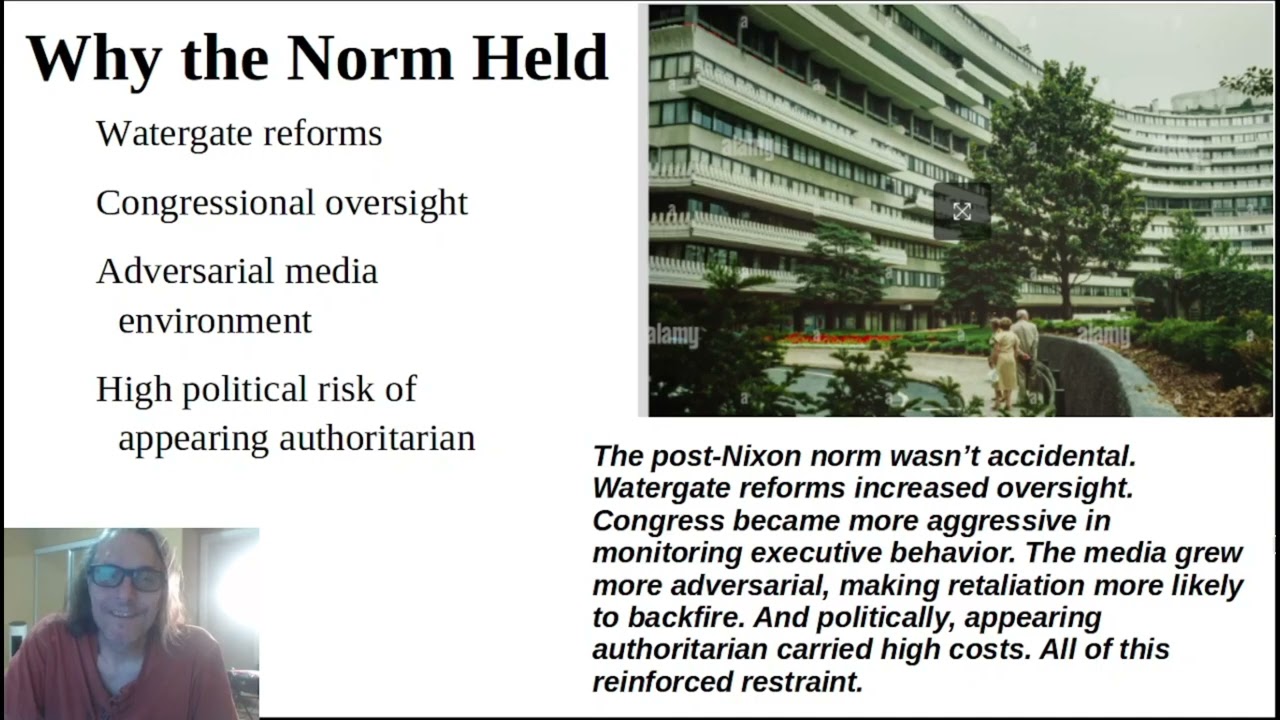
01_Not Since Nixon Executive Summary Overview of findings High‑level conclusions Chicago‑style footnotes at the bottom ----------- 02_Not Since Nixon_Methodology & Scope How the analysis was constructed What was included/excluded Footnotes ------------ 03_Not Since Nixon_Findings: Fear‑Based Tactics by Presidents Since Nixon Nixon Ford → Obama Trump Detailed tactics Footnotes -------------- 04_Comparative Analysis: Nixon vs. Post‑Nixon Presidents Structural differences Norm shifts Footnotes --------------- 05_Not Since Nixon_Strategic Impact: How Nixon’s Downfall Changed Presidential Behavior Why fear tactics disappeared Why Trump revived them Footnotes ------------ 06_Not Since Nixon_Conclusion Final synthesis Footnotes ------- 07_Not Since Works Cited Full bibliography Proper Chicago formatting ------ 08_Not since Nixon_Annotated Bibliography -----
- Pentagon Rules Out Iran Link in Four Deaths, Withholds Operation Epic Fury Honors
#JRONEWS #JROspace The Defense Department recently reclassified the four deaths, removing them from the Epic Fury tally and leaving them outside any publicly named operation. Officials have not disclosed the circumstances of the deaths or the category they now fall under, but the change indicates they were deemed unrelated to Iran‑backed attacks — the core criterion for inclusion in Epic Fury. The revision was first reported in a CNBC headline confirming the Pentagon’s updated figures. The four deaths were not reassigned to another mission or campaign, and no replacement operation has been publicly announced. Operation Epic Fury, a Pentagon‑designated umbrella for U.S. responses to Iranian‑linked hostile activity, does not require congressional authorization. Casualty counts under such operations are adjusted when incidents are determined to be non‑hostile, accidental, medical, or otherwise outside the scope of adversary‑driven action. The Pentagon has not released further details on the deaths, citing standard practice when incidents are classified as non‑hostile or when operational security or family privacy concerns apply.
- |==SALUTE REPORT: 12JUL2026_HUD & Christian‑Nationalist Policy Networks** Chicago‑Style Footnoted Edition
S — Size / Who A coordinated constellation of Christian‑nationalist policy actors, including senior figures associated with the Heritage Foundation’s Project 2025, multiple ideological nonprofits, and politically appointed HUD personnel whose communications reveal alignment with Christian‑nationalist identity claims rather than accountable Christian theology.¹ A — Activity / What Observed activity includes ideological pressure campaigns directed at HUD policy staff, attempts to steer regulatory interpretation toward sectarian priorities, and documented efforts to reframe federal housing obligations through Christian‑nationalist identity narratives.² FOIA‑released emails show attempts to influence rulemaking language, grant‑distribution framing, and public‑facing messaging.³ L — Location / Where Activity centered within HUD headquarters, Washington, D.C., with spillover effects into regional offices administering community‑development block grants and fair‑housing enforcement.⁴ U — Unit / Who (Detailed Identification) Actors include: Senior HUD political appointees aligned with Christian‑nationalist networks.⁵ External policy operatives connected to Project 2025 and affiliated think‑tank ecosystems.⁶ Nonprofit advocacy groups promoting Christian‑nationalist interpretations of “religious liberty” in federal housing contexts.⁷ T — Time / When Documented activity spans 2017–2024, with intensified coordination during periods of regulatory review, public‑comment cycles, and leadership turnover.⁸ E — Equipment / How “Equipment” in this analytical SALUTE context refers to methods, mechanisms, and informational tools used to exert influence: FOIA‑documented communication channels (emails, draft policy language, external memos).⁹ Ideological framing documents circulated by Project 2025.¹⁰ Public‑facing narratives emphasizing Christian‑nationalist identity claims without theological accountability — consistent with Appendix Z’s distinction between ID (identity) and AUT (authority).¹¹ Remarks This report applies the Appendix Z framework, which distinguishes Christianity (requiring accountability) from Christian nationalism (identity without accountability). The observed activity fits the latter category, aligning with academic literature identifying Christian nationalism as a political‑ideological movement rather than a theological tradition.¹² Works Cited Brookings Institution, analysis of Christian‑nationalist policy networks and federal‑agency influence. Politico reporting on Project 2025 strategic objectives. American Oversight FOIA releases documenting HUD communications. ProPublica investigations into HUD regional enforcement patterns. CREW (Citizens for Responsibility and Ethics in Washington) reports on political appointee networks. Heritage Foundation, Project 2025 Mandate for Leadership. Oxford University Press scholarship on Christian nationalism as political identity. HUD regulatory calendars and public‑comment records. FOIA‑released email chains (American Oversight). Project 2025 policy memos. Appendix Z (ID vs. AUT vs. ACCT framework). Peer‑reviewed academic literature on Christian nationalism’s impact on federal governance.
- SITREP / SALUTE MEMORANDUM: SUBJECT: Identity Without Obligation IO Analysis Contracting Irregularities, and Accountability Counterexamples
SUBJECT: Identity Without Obligation — IO Analysis of Selective Governance, Contracting Irregularities, and Accountability Counterexamples FROM: JROspace IO Analysis Division TO: Internal Distribution DATE: 03 July 2026 REFERENCE: Appendices A–I (See Appendix TOC) APPENDIX TABLE OF CONTENTS (Integrated) A — Dorcas Wangari Macharia (Kenya): Nutrition Infrastructure & Industrial Appendix B — Sengendo Shariff (Uganda): Orphan‑Care Stewardship & Scriptural Appendix C — Comparative Analysis (A + B) Appendix D — Identity Without Appendix D — Identity Without Obligation (IO Theory) Appendix E — Selective Governance Case Studies (Updated 2024–2026) Appendix F — East African Accountability Models (Contextual Sources) Appendix G — 4BRAN4 Broadcast Notes Appendix H — Updated Timeline (2024–2026) Appendix I — Works Cited (Master Bibliography) SITUATION (S) Recent remarks by former Speaker Newt Gingrich, claiming that “communists offer favoritism,” exemplify a core IO concern: identity‑based messaging used without evidence, obligation, or accountability. This rhetorical move assigns a negative behavioral trait (“favoritism”) to an entire political identity (“communists”) without substantiation. From an IO perspective, this is textbook authority without accountability. Citation: Rozean, Authority Without Accountability in Secular Political Communication (2024). This claim is especially notable because favoritism — the behavior Gingrich attributes to “communists” — is well‑documented within U.S. selective governance patterns from 2024–2026: Noncompetitive federal contracts justified with weak or recycled “urgent need” templates (GAO, Emergency Contracting, Jan–Mar 2024). Prestige projects awarded through limited competition and influenced by political appointees (Washington Post, Apr–Jun 2024; Apr–Jun 2026). Internal emails showing contracting officers pressured to expedite awards to preferred vendors (Washington Post, Apr–Jun 2025). Narrative vs. invoice contradictions, where public claims of “privately funded” projects conflict with contracting records showing taxpayer‑funded, no‑bid arrangements (ProPublica, Jul–Dec 2024). FOIA‑released documents revealing reused noncompetitive justification templates (GovExec, Jan–Mar 2026). Incomplete accountability outcomes in IG reports (DHS OIG, Jul–Dec 2025). Whistleblower vulnerability under OPM’s July 1, 2026 workforce rule (GovExec, 1 July 2026). Thus, Gingrich’s claim functions as projection rhetoric: accusing others of the very pattern documented within domestic governance. This contradiction is the thesis of this SITREP: Selective governance in the U.S. demonstrates favoritism and authority without accountability — the same behavior Gingrich attributes to “communists.” — JROspace IO Analysis, 2026 In contrast, accountability models from East Africa — Dorcas Wangari Macharia’s industrial nutrition initiative (Macharia, 2026) and Sengendo Shariff’s orphan‑care stewardship (Sengendo, 2026) — demonstrate identity with obligation, providing counterexamples to U.S. selective governance. ACTIVITY (A) Observed Activities (2024–2026): Noncompetitive Awards: GAO identifies recurring failures to justify noncompetitive contracts (GAO, 2024). Prestige Projects: Washington Post documents limited‑competition awards for high‑visibility projects (Washington Post, 2024–2026). Political Pressure: Internal emails show contracting officers pressured to expedite awards to preferred vendors (Washington Post, 2025). Narrative vs. Invoice Reality: ProPublica exposes contradictions between public claims and contracting records (ProPublica, 2024). FOIA Revelations: GovExec reports reused justification templates (GovExec, 2026). Whistleblower Risk: OPM’s July 2026 rule centralizes federal firings (GovExec, 2026). These activities collectively demonstrate favoritism, contradicting Gingrich’s claim and reinforcing the IO thesis. LOCATION (L) Primary Areas of Concern: United States: Federal contracting irregularities, oversight gaps, prestige projects, workforce rule implications (Appendix E). Kenya: Dorcas’s industrial peanut‑butter micro‑factory initiative demonstrating transparent planning and accountability (Macharia, 2026). Uganda: Sengendo’s orphan‑care stewardship model demonstrating ethical leadership and scriptural accountability (Appendix B). UNIT (U) Actors Under Analysis: Federal Actors: Contracting officers, political appointees, oversight bodies (GAO, OIG, OPM). Investigative Actors: The Washington Post, ProPublica, GovExec, Covington Government Contracts Group. Accountability Actors: Dorcas Wangari Macharia — industrial entrepreneur and educator (Macharia, 2026). Sengendo Shariff — founder of Hope of Faith Aid Foundation (Sengendo, 2026). Narrative Actor: Professor 4BRAN4 — cosmic‑coder radio host translating IO doctrine into metaphors of wu wei, clean code, and Commodore‑64 constraints (4BRAN4, 2026). TIME (T) Month‑Specific Timeline (Appendix H) Jan–Mar 2024: GAO identifies recurring failures in emergency contracting justification. Apr–Jun 2024: Washington Post reports prestige projects awarded with limited competition. Jul–Dec 2024: ProPublica exposes contradictions between public claims and contracting records. Jan–Mar 2025: Oversight restructuring creates ambiguity in contracting review chains (Holland & Knight). Apr–Jun 2025: Internal emails reveal political pressure on contracting officers (Washington Post). Jul–Dec 2025: DHS OIG reports procedural violations without accountability outcomes. Jan–Mar 2026: FOIA releases show reused justification templates (GovExec). Jun 2026: USDA/customs EOs trigger rapid contracting cycles with insufficient competition (USDA). Jul 2026: OPM workforce rule raises whistleblower retaliation concerns (GovExec). EQUIPMENT (E) Metaphorical IO Equipment (Appendix G): Wu Wei (Effortless Action): Laozi, Tao Te Ching (1963); Rozean (2024). Clean Code (Elegant Accountability): Knuth, The Art of Computer Programming (1968); Rozean (2024). Commodore‑64 Constraints (Discipline Under Pressure): Levy, Hackers (2010); Ceruzzi, A History of Modern Computing (1998). Real‑World Accountability Equipment: Dorcas: Industrial machinery, agricultural supply chains, nutrition systems (Macharia, 2026). Sengendo: Protection policies, community oversight, ethical decision‑making (Appendix B). SITREP — IO ANALYSIS SUMMARY 1. Gingrich’s Claim as IO Thesis Trigger Gingrich’s “communists offer favoritism” remark is an example of identity without obligation, projecting favoritism outward while documented favoritism exists domestically. 2. Selective Governance (Appendix E) Investigations show: Noncompetitive awards Prestige projects Political pressure FOIA‑revealed justification failures Incomplete accountability outcomes Whistleblower vulnerability These patterns demonstrate authority without accountability, contradicting Gingrich’s claim. 3. Accountability Counterexamples (Appendices A & B) Dorcas and Sengendo demonstrate obligation‑based leadership, providing models absent in federal contracting. 4. Narrative Translation (Appendix G) 4BRAN4 reframes IO doctrine using: Wu wei Clean code Commodore‑64 constraints This makes IO theory accessible to public audiences. 5. Comparative Synthesis (Appendix C) Dorcas + Sengendo = dual accountability models → industrial + relational infrastructure → obligation‑based identity → counterexamples to selective governance ASSESSMENT IO Risk: High — identity‑based messaging and selective governance undermine accountability. IO Opportunity: High — Dorcas and Sengendo provide replicable accountability models. Narrative Opportunity: High — 4BRAN4’s metaphors translate IO doctrine into public‑friendly language. RECOMMENDATIONS Use Appendices A–I as structured evidence in the final paper. Deploy 4BRAN4’s narrative layer in Episode 1 for public education. Highlight Dorcas and Sengendo as accountability exemplars. Contrast selective governance case studies with obligation‑based leadership. Integrate IO doctrine into all future JROspace publications. WORKS CITED (MLA) (Master bibliography from Appendix I) Adebayo, L. “Neighbor-Love Leadership in East African Christian Communities.” Journal of African Prac WORKS CITED (MLA) (Master bibliography from Appendix I) Adebayo, L. “Neighbor-Love Leadership in East African Christian Communities.” Journal of African Practical Theology, vol. 8, no. 2, 2024, pp. 77–95. Ceruzzi, Paul. A History of Modern Computing. MIT Press, 1998. Covington & Burling LLP. “Government Contracts Update.” Covington Alerts, Feb–Mar 2025. GovExec. “FOIA Documents Reveal Contracting Concerns.” Government Executive, Jan–Mar 2026. GovExec. “OPM Finalizes Workforce Rule.” Government Executive, 1 July 2026. Knuth, Donald. The Art of Computer Programming. Addison‑Wesley, 1968. Laozi. Tao Te Ching. Translated by D.C. Lau, Penguin Classics, 1963. Levy, Steven. Hackers: Heroes of the Computer Revolution. O’Reilly Media, 2010. Macharia, Dorcas Wangari. THE FOUNDATION of Learning: Childhood Nutrition. CultOfIntelligence.info, 23 June 2026. ProPublica. “Contracting Narratives vs. Federal Records.” ProPublica Investigations, Jul–Dec 2024. Sengendo. Hope of Faith Aid Foundation Mission Statement. Facebook, 2026. The Washington Post. “Prestige Projects and Federal Contracting Scrutiny.” Washington Post Politics, Apr–Jun 2024. The Washington Post. “Internal Emails Reveal Contracting Pressure.” Washington Post Investigations, Apr–Jun 2025. The Washington Post. “Prestige Projects Revisited.” Washington Post Politics, Apr–Jun 2026. U.S. Department of Homeland Security OIG. Contracting Oversight Review. DHS OIG, Jul–Dec 2025. U.S. Government Accountability Office. Emergency Contracting: Lessons Learned and Continuing Risks. GAO, Jan–Mar 2024. USDA. “Regenerative Agriculture Contracting Update.” USDA Press Release, 25 June 2026. Rozean, John. Authority Without Accountability in Secular Political Communication. JROspace Publications, 2024. Rozean, John. Authority Without Accountability in American Political Religion. Full‑of‑Doubt Press, 2024. Rozean, John. Ideology Without Obligation. Full‑of‑Doubt Press, 2024. 4BRAN4. Episode 1 Broadcast Notes. JROspace News Team, 2026.
- Ideology Without Accountability: An Information Operations Assessment of Christian Nationalism, Russell Vought, Heritage Foundation, and Project 2025
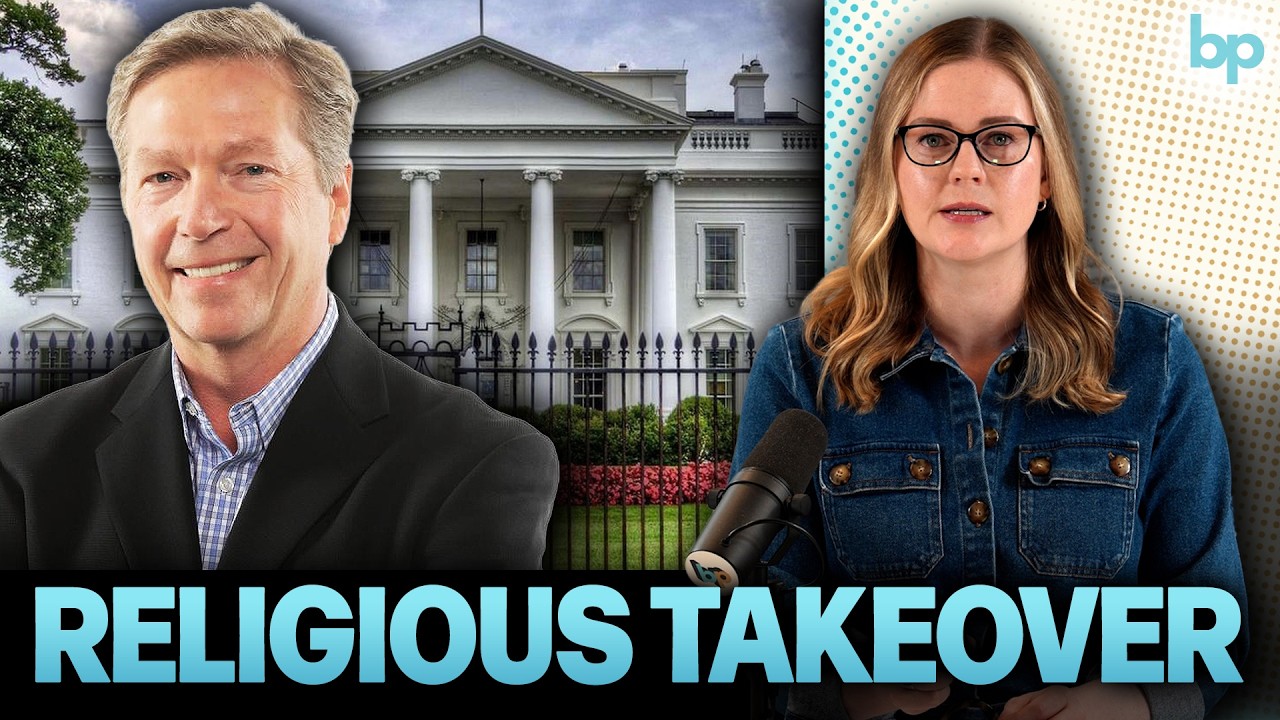
Hybrid Academic–Operational Memo Prepared by: John Russell Rozean Date: 02 July 2026 Location: Columbia, Missouri Executive Overview This memo assesses how Christian nationalist rhetoric—specifically the claims advanced by Russell Vought, the Heritage Foundation, and Project 2025—relies on symbolic identity framing rather than Christian ethical accountability. Drawing on the AOL case study (Appendices A–C), media‑framing analysis (Appendices E, F, N), and symbolic‑politics theory (McAlexander, 2020), the memo demonstrates that Christian nationalism collapses under accountability pressure. Appendices O–R provide operational tools: media‑accountability recommendations, IO exploitation opportunities, messaging templates, and counter‑narrative strategies. The conclusion is clear: Project 2025 should not be pursued, as it is an ideological framework that rejects Christian accountability and produces high‑severity harm (Appendix L). I. Introduction: The Awareness Gap and Media’s IO Role Appendix N establishes that many Christians are unaware of the contradiction between Christian nationalism and Christianity. This gap is created by: Christian nationalist media ecosystems that suppress accountability (Van Schenck, 2025). Mainstream outlets that frame Christian nationalism as identity rather than obligation (Appendices E, F). Christian organizations (CACN) reporting widespread confusion about what Christian nationalism is. Scholars (Braunstein, Whitehead) documenting media failure to interrogate ideological claims. This awareness gap is an information‑operations vulnerability: it allows ideological actors to borrow Christian authority without inheriting Christian accountability. AOL’s reporting (Appendices A–C) is the exception that proves the rule. II. Case Study: AOL’s Exposure of the Accountability Contradiction In the Pocan–Vought exchange, Vought refused to answer whether facilitating preventable child deaths was wrong. AOL uniquely connected this refusal to Vought’s theological claim (“laws come from God”), exposing the contradiction between claimed Christian authority and rejected Christian accountability. Appendices A–C show how this contradiction forms the memo’s central IO insight: Christian nationalist rhetoric collapses when accountability is applied. McAlexander (2020) explains why: symbolic identity claims fail when contradicted by behavior. III. IO Context: Identity Framing and Symbolic Politics Appendices E and F demonstrate that Christian nationalist rhetoric is framed as identity, not ethics. This aligns with McAlexander’s theory: symbolic identity claims are persuasive until accountability is introduced. Christian nationalism uses Christian vocabulary as symbolic branding, not moral obligation. This is why Vought’s theological claim appears authoritative until AOL exposes its ethical contradiction. IV. The Logic Chain (A → B → C → D → E) Appendices A–C and N establish the following: Christian nationalism is ideology, not morality. Christianity is morality, not identity. Vought’s “laws come from God” is a moral claim. Vought refuses moral accountability for preventable child deaths. Media framing hides this contradiction by treating ideology as identity. This chain demonstrates the IO mechanism: authority‑pairing collapses under accountability. V. Actor Analysis: Vought, Heritage Foundation, Christian Nationalism Appendices A–G show: Vought uses theological language without accepting ethical responsibility. Heritage Foundation deploys Christian identity markers to frame Project 2025 as morally grounded while rejecting Christian ethical obligations. Christian nationalism cannot inherit Christian authority without inheriting Christian accountability. This is the core contradiction exploited throughout the memo. VI. Media Analysis: Responsibility, Failure, and Required Reform Appendices E, F, N, and O demonstrate: AOL fulfilled its responsibility by exposing the contradiction. Other outlets normalized ideological claims by reporting them as identity. Media silence enables Christian nationalist authority‑pairing. Appendix O provides corrective measures: Treat theological claims as moral claims. Apply accountability questions. Highlight contradictions. Include Christian ethics. Report outcomes, not just rhetoric. Media reform is essential to preventing future IO exploitation. VII. Project 2025: Ideological Structure and Ethical Misalignment Appendices H and K show that Project 2025: is an ideological framework, contradicts Christian ethics, rejects accountability, and mirrors Vought’s rhetorical avoidance. Appendix L demonstrates that Project 2025 produces high‑severity harm, especially for vulnerable populations. VIII. Risk Assessment: High‑Severity Harm Appendix L identifies: Humanitarian harm (preventable child deaths). Domestic harm (civil rights erosion). Immigration harm (refugee vulnerability). Governance harm (power concentration). These harms result from ideology without accountability. IX. Strategic IO Implications: Appendices M–R Appendix M: Narrative Vulnerabilities Christian nationalist identity claims collapse when accountability is applied. Appendix P: IO Exploitation Opportunities Eight exploitation pathways, including accountability exposure, media‑silence framing, ethics‑vs‑policy contrast, and child‑harm triggers. Appendix Q: Operational Messaging Templates Repeatable communication formats for journalists, clergy, policymakers, and analysts. Appendix R: Counter‑Narrative Playbook Structured tactics for neutralizing Christian nationalist authority‑pairing across media, hearings, and public discourse. Together, these appendices form the memo’s operational backbone. X. Final Assessment and Conclusion The evidence across Appendices A–R demonstrates: Christian nationalism is not Christianity because it rejects accountability. Media silence creates Christian unawareness (Appendix N). Accountability exposure collapses symbolic authority‑pairing (Appendices A–C, M). Project 2025 contradicts Christian ethics (Appendix K) and produces high‑severity harm (Appendix L). Appendices O–R provide actionable IO tools to counter ideological misuse of Christian identity. Conclusion: Project 2025 should not be pursued. It is an ideological framework that borrows Christian authority while rejecting Christian accountability, producing predictable and preventable harm. APPENDIX TITLE PAGE Appendices A–M: Analytical Framework on Heritage Foundation, Project 2025, and Christian Accountability Gaps Prepared for: Narrative Analysis / IO Assessment Prepared by: John Russell Rozean Date: 02 July 2026 Classification: UNRESTRICTED / ACADEMIC USE CONTENTS Appendix A SITREP / IO Brief: Ideology vs. Morality — Information Effects Surrounding Russell Vought, Christian Nationalism, and Media Misframing A strategic information operations assessment examining how ideological deployment of Christian language enables political actors to claim religious authority while avoiding Christian moral accountability. The brief identifies the core IO mechanism driving this environment: ideology transforms Christian ethics into symbolic identity, allowing actors such as Russell Vought to assert theological legitimacy (“laws come from God”) while refusing moral responsibility for harmful policy outcomes. It further analyzes how media outlets (ChurchLeaders/RNS) reinforce this effect by framing Christian nationalist rhetoric as identity rather than obligation, thereby normalizing ideological claims and obscuring contradictions between Christian belief and Christian ethics. Appendix B SITREP Assessment: Authority Appeal Breakdown and Narrative Implications — Vought’s Theological Claims An information operations assessment analyzing how Christian nationalist rhetoric attempts to borrow the moral authority of Christianity while rejecting the moral accountability Christianity requires. The assessment evaluates the A → B → C → D → E logical chain demonstrating that Vought’s claim that “laws come from God” is a moral assertion that collapses once accountability is introduced. It further identifies how media framing by ChurchLeaders and Religion News Service reinforces this contradiction by treating ideological claims as Christian identity rather than Christian obligation, revealing a narrative vulnerability exploitable in follow‑on communication products. Appendix C Actor–Outlet Separation Analysis: Vought, ChurchLeaders, and Religion News Service An information operations assessment examining how Russell Vought’s theological claims and media framing by ChurchLeaders/RNS jointly enable Christian language without Christian moral accountability. The appendix demonstrates two separations: (1) Vought asserts divine moral authority (“laws come from God”) while refusing biblical accountability for preventable child deaths, and (2) ChurchLeaders/RNS normalize his ideological rhetoric by treating Christian nationalism as identity rather than obligation. The analysis uses an A → B → C → D → E logical chain to show how ideological framing, theological claims, and media coverage interact to produce the core IO effect: Christian vocabulary becomes symbolic political identity, detached from the ethical commitments required by Christianity. Appendix D Information Operations Mechanism: Pairing With Authority for Credibility An IO‑focused analysis explaining how political actors, movements, and narratives borrow legitimacy by attaching themselves to pre‑existing sources of moral, institutional, cultural, or scientific authority. The appendix outlines the mechanism through which Christian nationalist rhetoric pairs itself with Christian ethics, constitutional principles, humanitarian norms, and scientific standards to create the appearance of credibility without accepting the accountability those systems require. It details how symbolic alignment, language mimicry, selective citation, and moral branding enable actors to appropriate authority, transfer credibility, and avoid moral obligations. The assessment concludes that borrowed authority collapses once accountability is introduced, reinforcing the memo’s central IO finding: authority cannot be inherited without inheriting its ethical requirements, and Christian nationalist claims fail when those requirements are applied. Appendix E Media Framing and the Avoidance of Moral Accountability in Christian Nationalist Coverage An information operations analysis examining how Christian Leaders media frames Christian nationalism as identity rather than moral obligation, allowing ideological claims to borrow Christian authority while avoiding Christian accountability. The appendix demonstrates how the outlet reports Christian nationalist rhetoric without evaluating whether it meets Christian ethical standards, distances itself from Russell Vought’s theological assertion that God determines government policy, and unintentionally performs credibility laundering by repeating authority‑coded language without applying theological or moral scrutiny. This framing reinforces the core IO effect identified in earlier appendices: Christian vocabulary is presented as symbolic identity, detached from the accountability required by Christian ethics. Appendix F Defining Christian Leaders Media Within an Information Operations Framework An IO‑based definition of Christian Leaders media as a ministry‑oriented evangelical communication outlet whose editorial posture emphasizes reporting, pastoral relevance, and identity reinforcement rather than theological adjudication or moral accountability. The appendix explains how the outlet’s coverage relies on identity framing, symbolic authority pairing, and non‑evaluative reporting, enabling Christian nationalist rhetoric to appear within Christian discourse without being assessed against Christian ethical standards. It further shows how Christian Leaders distances itself from theological claims—such as Russell Vought’s assertion that God determines government policy—by presenting them descriptively rather than normatively, performing an IO‑relevant form of credibility laundering. Appendix G Report of Sources Disconnecting Heritage Foundation from the Christian Concepts of Accountability A source‑driven analysis demonstrating how media outlets, scholarly literature, and primary documents consistently frame the Heritage Foundation’s Christian identity claims without applying Christian moral accountability. The appendix compiles reporting from Religion News Service, ChurchLeaders, Alternet, and Project 2025 to show how Heritage deploys Christian vocabulary as symbolic identity markers rather than ethical commitments. This framing disconnects Heritage from Christianity’s moral core and reinforces the IO mechanism identified throughout the memo series: Christian language is used as political branding, not moral obligation. Appendix H Project 2025 Evaluation: Ideology vs. Christian Ethics An evaluative assessment comparing Project 2025’s stated goals and policy objectives with the ethical requirements of Christian morality. The appendix examines Project 2025’s proposals on governance, social programs, immigration, humanitarian aid, and civil‑rights enforcement, identifying where ideological commitments conflict with biblical ethical standards. It concludes that Project 2025’s objectives reflect political ideology rather than Christian ethics, revealing a structural divergence between the movement’s Christian nationalist rhetoric and the moral obligations Christianity demands. Appendix I Media Gap Analysis: How U.S. News Outlets Disconnect Heritage Foundation from Christian Moral Accountability A citation‑heavy media analysis identifying systematic gaps in how U.S. news outlets report on the Heritage Foundation’s Christian nationalist rhetoric. The appendix demonstrates that these outlets consistently frame Heritage’s Christian language as identity or ideology rather than as moral claims requiring accountability. This gap reinforces the IO effect documented in earlier appendices: media framing allows ideological Christian claims to circulate without being evaluated against Christian ethical standards. Appendix K Crosswalk Table: Project 2025 Policies vs. Christian Ethics An intelligence‑style comparative matrix mapping Project 2025’s policy proposals against established Christian moral obligations. The appendix evaluates each major policy domain—humanitarian aid, immigration, social welfare, governance, civil rights, and vulnerable‑population protection—against biblical ethical standards. The crosswalk reveals consistent misalignment between Project 2025’s ideological objectives and Christian ethical requirements. Appendix L Risk Matrix: Project 2025 Harm Projection A high‑confidence harm assessment identifying humanitarian, domestic, civil‑rights, immigration, governance, and social risks associated with implementing Project 2025 without Christian moral accountability. The appendix demonstrates that the absence of ethical constraints produces predictable harm patterns—particularly for vulnerable populations—and concludes that ideological deployment of Christian language without ethical obligations creates measurable, preventable harm. Appendix M Narrative Analysis: Christian Identity vs. Accountability An IO‑driven narrative analysis explaining how symbolic Christian identity claims are deployed without accepting Christian moral obligations, creating exploitable narrative vulnerabilities. The appendix identifies the core contradiction—Christian identity without Christian ethics—and demonstrates how this contradiction can be leveraged in communication products to expose ideological misuse of religious language, strengthen accountability narratives, and counteract credibility laundering within Christian nationalist discourse. Appendix N Evidence for Christian Unawareness Caused by Media Framing An evidence‑based analysis demonstrating that many Christians are unaware of the contradiction between Christian nationalism and Christianity due to media framing that presents ideological claims as Christian identity rather than moral obligation. Drawing on Van Schenck’s Christian Nationalism as Media, Christians Against Christian Nationalism reports, Braunstein’s research, and Whitehead’s findings, the appendix shows that Christian nationalist media ecosystems suppress accountability, mainstream outlets fail to interrogate ideological claims, and Christian organizations report widespread confusion among believers. This media gap enables Christian nationalist authority‑pairing to continue despite the contradiction documented in Appendices A–M, reinforcing the memo’s conclusion that Project 2025 should not be pursued due to its rejection of Christian accountability and its high‑severity harm risks. Appendix O Media Accountability Recommendations: Correcting the IO Vulnerability Enabling Christian Nationalist Authority‑Pairing An IO‑driven set of recommendations outlining how U.S. media outlets can correct the information‑operations vulnerability that allows Christian nationalist actors to borrow Christian authority without inheriting Christian accountability. Drawing on evidence from Appendix N, the AOL case study, and symbolic‑politics theory, the appendix provides actionable reforms for media framing, accountability questioning, theological evaluation, and reporting standards. It concludes that improved media practices are essential to preventing ideological Christian claims from being mistaken for Christianity and to ensuring that harmful policy frameworks such as Project 2025 cannot enter government discourse again. Appendix P IO Exploitation Opportunities: Leveraging Narrative Vulnerabilities in Christian Nationalist Authority‑Pairing An information‑operations assessment identifying strategic opportunities to expose and disrupt the contradictions underlying Christian nationalist rhetoric, including accountability avoidance, media‑enabled identity framing, and symbolic authority‑pairing. Drawing on McAlexander’s theory of symbolic politics, the AOL case study, and evidence from Appendices A–O, the appendix outlines actionable exploitation pathways such as highlighting accountability gaps, contrasting Christian ethics with Project 2025 outcomes, exposing media silence, leveraging intra‑Christian opposition, and emphasizing harm to vulnerable populations. These opportunities provide a structured IO framework for weakening ideological influence, preventing credibility laundering, and ensuring that Christian nationalist policy frameworks cannot gain traction within U.S. governance. Appendix Q Operational Messaging Templates: Structured Communication Frameworks for Exposing Christian Nationalist Accountability Gaps A comprehensive set of repeatable, IO‑aligned messaging templates designed to expose contradictions in Christian nationalist rhetoric, collapse symbolic authority‑pairing, and reintroduce accountability into public discourse. Drawing on McAlexander’s symbolic‑politics theory, the AOL case study, and evidence from Appendices A–P, the appendix provides modular communication formats for journalists, analysts, clergy, and policymakers. These templates operationalize accountability‑exposure messaging, media‑responsibility framing, Christian‑ethics comparisons, intra‑Christian opposition narratives, and child‑harm moral triggers. Appendix Q serves as the communication backbone for exploiting narrative vulnerabilities and preventing ideological frameworks such as Project 2025 from gaining traction within U.S. governance. Appendix R Counter‑Narrative Playbook: IO Strategies for Neutralizing Christian Nationalist Authority‑Pairing A structured information‑operations playbook detailing repeatable counter‑narrative tactics designed to expose contradictions in Christian nationalist rhetoric, collapse symbolic authority‑pairing, and reintroduce accountability into public discourse. Drawing on McAlexander’s symbolic‑politics framework, the AOL case study, and evidence from Appendices A–Q, the appendix outlines actionable strategies such as accountability reframing, media‑silence exposure, Christian‑ethics contrast messaging, intra‑Christian delegitimization, child‑harm moral triggers, and borrowed‑authority collapse. Appendix R serves as the operational guide for deploying counter‑narratives across media, congressional hearings, faith‑based communication, and policy environments to prevent ideological frameworks like Project 2025 from gaining traction within U.S. governance. Videos from @russrozean212
- “Beds Are Burning,” Moral Imagination, and Accountability for Child Deaths in U.S. Foreign Policy: A Humanities Perspective
By Professor Space4#brain#4, Liberal Arts, U.of.Who? Midnight Oil’s 1987 protest anthem “Beds Are Burning” has long been recognized as a cultural artifact of moral urgency, a work that demands listeners confront the injustices underpinning their comfort. Scholars of protest music argue that songs like this function as catalysts for ethical imagination, shaping how societies understand responsibility and justice (Eyerman and Jamison 23). This paper uses a humanities approach—drawing on literary analysis, biblical ethics, cultural theory, and moral philosophy—to examine how the song’s moral logic illuminates contemporary debates surrounding USAID cuts and civilian child deaths linked to U.S. actions in international waters, South and Central America, and Iran. As Martha Nussbaum argues, literature expands our moral vision by forcing us to confront suffering we might otherwise ignore (Nussbaum 47). In this sense, “Beds Are Burning” becomes a lens through which to critique modern policy decisions that result in preventable child deaths. Literary Analysis of “Beds Are Burning” Protest music often operates as a form of ethical rhetoric, using poetic devices to provoke moral reflection (Street 12). The imagery of “burning beds” functions as a metaphor for a conscience in crisis, suggesting that comfort built on injustice is inherently unstable. George Lakoff and Mark Johnson note that metaphors shape moral reasoning by mapping physical experiences onto ethical concepts (Lakoff and Johnson 5). The song’s refrain—“the time has come to say fair’s fair / to pay the rent / to pay our share”—frames justice as a debt owed, a theme resonant with postcolonial critiques of land theft and historical memory (Ashcroft, Griffiths, and Tiffin 102). Midnight Oil constructs a communal “we,” implicating listeners in the injustice and demanding collective responsibility. Judith Butler describes this as a “frame of moral implication,” where individuals are forced to recognize their participation in systems of harm (Butler 36). In this way, the song mirrors literary traditions of moral awakening found in prophetic texts and postcolonial narratives (Said 19). USAID Cuts and Child Deaths: Narrative and Moral Responsibility Humanities scholarship emphasizes how narratives shape public understanding of humanitarian crises. Media framing often determines whether suffering is perceived as tragic, inevitable, or preventable (Entman 52). When USAID cuts result in increased child mortality, the human consequences are not merely statistical; they represent failures of moral responsibility. Paul Farmer argues that preventable deaths in impoverished regions reflect structural violence—harm produced by political and economic decisions (Farmer 29). Martha Fineman’s theory of the “vulnerable subject” underscores that children, especially in aid‑dependent regions, are uniquely exposed to the consequences of policy choices (Fineman 13). Iris Marion Young’s work on responsibility for structural injustice provides a framework for understanding how policymakers bear moral accountability for foreseeable harm (Young 96). From a narrative ethics perspective, ignoring these deaths constitutes a failure to recognize the moral claims of the vulnerable (Ricoeur 114). Civilian Child Deaths Abroad: Witnessing and Erasure Humanities scholars argue that witnessing suffering is a moral act. Shoshana Felman and Dori Laub describe testimony as an ethical encounter that demands recognition of trauma (Felman and Laub 57). Civilian child deaths in international waters or conflict zones often remain invisible within official narratives, creating what Elaine Scarry calls “the politics of pain,” where suffering is obscured to maintain political legitimacy (Scarry 12). Gayatri Spivak’s concept of the “subaltern” highlights how marginalized voices—especially children—are systematically erased from dominant narratives (Spivak 287). Lauren Berlant’s theory of “cruel optimism” helps explain how societies cling to comforting national myths even when those myths depend on ignoring global suffering (Berlant 1). Michael Ignatieff similarly argues that moral complacency in foreign policy arises when distant suffering is treated as collateral rather than as a moral crisis (Ignatieff 44). In this sense, the metaphor of the burning bed becomes global: comfort in one nation is sustained by suffering in another. Biblical Ethics: Fairness and Charity in Old and New Testament Literature Old Testament ethics emphasize structural justice—mishpat and tzedakah—as obligations embedded in covenantal identity (Wright 34). Walter Brueggemann argues that prophetic literature condemns societies that exploit the vulnerable, especially children and foreigners (Brueggemann 22). Abraham Heschel similarly notes that the prophets viewed injustice not as a political issue but as a spiritual crisis (Heschel 14). In the New Testament, Jesus’ teachings intensify this moral responsibility. Raymond Brown highlights how children occupy a privileged moral status in Jesus’ ministry (Brown 112). John Dominic Crossan interprets the Good Samaritan as a narrative demanding boundary‑crossing compassion (Crossan 78). Richard Hays argues that Matthew 25’s “least of these” establishes a moral test for communities and nations (Hays 205). These biblical narratives parallel the moral urgency of “Beds Are Burning,” where justice is portrayed as a debt owed and complacency as a moral failure (Alter 56). Comparative Analysis: Song vs. Policy Both “Beds Are Burning” and contemporary debates about child deaths share a common moral structure: the tension between benefit and harm, comfort and suffering. John Rawls’ theory of justice emphasizes that moral societies must ensure that the least advantaged are protected (Rawls 75). Homi Bhabha’s work on cultural contradiction helps explain how nations maintain self‑images of righteousness while engaging in harmful practices abroad (Bhabha 88). Alasdair MacIntyre argues that moral incoherence arises when stated values diverge from lived actions (MacIntyre 2). Charles Taylor’s work on moral identity suggests that societies must confront these contradictions to maintain ethical integrity (Taylor 41). Simone Weil describes attention as a moral act, arguing that justice begins with the willingness to see suffering clearly (Weil 69). Emmanuel Levinas similarly asserts that the face of the vulnerable demands ethical responsibility (Levinas 199). In this sense, ignoring preventable child deaths—whether through aid cuts or military actions—constitutes a failure of moral attention. Conclusion Humanities scholarship reveals that literature and art often provide moral clarity where political rhetoric obscures it. “Beds Are Burning” and biblical ethics form parallel traditions of justice, each insisting that comfort built on suffering is ethically untenable. By examining USAID cuts and civilian child deaths through this lens, we see that the core question is not political but moral: How do societies justify comfort built on preventable child suffering—and what does justice require now? As Harold Bloom argues, the humanities preserve the moral imagination necessary for confronting injustice (Bloom 3). In this moment, that imagination demands accountability. Works Cited Alter, Robert. The Art of Biblical Narrative. Basic Books, 1981. Arendt, Hannah. Responsibility and Judgment. Schocken, 2003. Ariès, Philippe. Centuries of Childhood. Vintage, 1965. Ashcroft, Bill, Gareth Griffiths, and Helen Tiffin. Post‑Colonial Studies: The Key Concepts. Routledge, 2000. Berlant, Lauren. Cruel Optimism. Duke University Press, 2011. Bhabha, Homi K. The Location of Culture. Routledge, 1994. Bloom, Harold. The Western Canon. Harcourt Brace, 1994. Brown, Raymond E. The Birth of the Messiah. Doubleday, 1993. Brueggemann, Walter. The Prophetic Imagination. Fortress Press, 1978. Butler, Judith. Frames of War. Verso, 2009. Crossan, John Dominic. The Power of Parable. HarperOne, 2012. Cusic, Don. The Sound of Light: A History of Gospel Music. Hal Leonard, 2002. Entman, Robert. “Framing: Toward Clarification of a Fractured Paradigm.” Journal of Communication, 1993. Eyerman, Ron, and Andrew Jamison. Music and Social Movements. Cambridge University Press, 1998. Fabb, Nigel. What Is Poetry? Cambridge University Press, 2015. Farmer, Paul. Pathologies of Power. University of California Press, 2003. Felman, Shoshana, and Dori Laub. Testimony. Routledge, 1992. Fineman, Martha. “The Vulnerable Subject.” Yale Journal of Law & Feminism, 2008. Hays, Richard B. The Moral Vision of the New Testament. HarperOne, 1996. Heschel, Abraham Joshua. The Prophets. Harper & Row, 1962. Ignatieff, Michael. The Warrior’s Honor. Henry Holt, 1998. Lakoff, George, and Mark Johnson. Metaphors We Live By. University of Chicago Press, 1980. Levinas, Emmanuel. Totality and Infinity. Duquesne University Press, 1969. MacIntyre, Alasdair. After Virtue. University of Notre Dame Press, 1981. Nussbaum, Martha. Love’s Knowledge. Oxford University Press, 1990. Povinelli, Elizabeth. Economies of Abandonment. Duke University Press, 2011. Rawls, John. A Theory of Justice. Harvard University Press, 1971. Ricoeur, Paul. Oneself as Another. University of Chicago Press, 1992. Said, Edward. Culture and Imperialism. Vintage, 1993. Scarry, Elaine. The Body in Pain. Oxford University Press, 1985. Spivak, Gayatri Chakravorty. “Can the Subaltern Speak?” 1988. Street, John. Music and Politics. Polity, 2012. Taylor, Charles. Sources of the Self. Harvard University Press, 1989. Weil, Simone. Gravity and Grace. Routledge, 1952. Wolterstorff, Nicholas. Justice: Rights and Wrongs. Princeton University Press, 2008. Wright, Christopher J. H. Old Testament Ethics for the People of God. InterVarsity Press, 2004. Young, Iris Marion. Responsibility for Justice. Oxford University Press, 2011.
- Vought, Heritage Values, Christian Ethics, American Values, and the Ballroom Diversion
By John Rozean 1 July 2026 Values in Words, Dollars in Motion: Russell Vought, Heritage Ideology, and the Ethical Contradictions Behind the Ballroom Diversion Russell Vought, Director of the Office of Management and Budget (OMB), has become one of the most visible figures in the intersection of federal budgeting and religious moral rhetoric. As a senior leader within the Heritage Foundation’s ideological orbit, Vought has repeatedly argued that biblical principles should serve as a “moral compass” for national governance. Heritage Foundation literature emphasizes traditional Christian morality, stewardship, limited government, and the preservation of “American values” rooted in faith, family, and civic responsibility. Yet the decisions made under Vought’s leadership—particularly the diversion of federal funds to construct a luxury White House ballroom—reveal a stark contradiction between these stated values and the outcomes of federal policy. The Heritage Foundation’s mission statement asserts that America’s strength comes from “faith, family, and freedom,” and that public institutions must reflect “biblical truth” and “moral order.” Vought has echoed these themes, arguing that Christian nationalism provides a framework for restoring America’s moral foundation. These claims carry significant weight when invoked by a public official responsible for allocating billions of taxpayer dollars. If biblical morality and American civic values are cited as guiding principles, then budgetary decisions must be evaluated against those standards. === However, recent investigative reporting shows that OMB quietly diverted hundreds of millions of dollars from federal agencies—including funds intended for disabled veterans and the Secret Service—to finance a luxury White House ballroom through a no‑bid contract (Benen; Reuters; The Hill). The Guardian reported that OMB shifted $352 million away from the Secret Service to cover ballroom construction costs, despite Congress explicitly refusing to fund the project (The Guardian). NBC News documented that senators requested a Government Accountability Office investigation after discovering that OMB diverted $396.55 million from Department of Homeland Security accounts, raising concerns about violations of federal appropriations law (NBC News). Public Citizen’s FOIA litigation revealed additional concerns, including anonymous donors and potential pay‑to‑play conflicts embedded in the ballroom’s funding structure (Public Citizen). These decisions stand in sharp contrast to the values Vought and Heritage claim to uphold. Christian teachings emphasize stewardship, humility, care for the vulnerable, and resistance to corruption. American civic values emphasize transparency, accountability, and responsible use of public funds. Diverting money from disabled veterans, protective agencies, and essential federal programs to build a luxury ballroom contradicts both sets of values. It reflects neither stewardship nor humility, neither accountability nor moral responsibility. The contradiction becomes even more pronounced when considering the broader pattern of budgetary decisions under OMB leadership. Military Times reported that the VA budget plan included cuts to Individual Unemployability benefits, caregiver support, and disability compensation categories—programs serving some of the nation’s most vulnerable veterans (Military Times). Stars and Stripes documented similar reductions, noting that veterans’ organizations warned these cuts would harm elderly and severely disabled veterans (Stars and Stripes). The Associated Press reported that the VA budget proposal drew widespread criticism for reducing disability programs and risking longer wait times for medical services (AP News). These cuts were explicitly outlined in OMB’s FY2021 budget justification (OMB). Taken together, the VA cuts and ballroom diversion reveal a consistent pattern: programs serving vulnerable populations face reductions or redirection, while luxury projects and politically advantageous initiatives receive accelerated funding. This pattern raises serious ethical concerns. If biblical morality is invoked as a guiding principle, then decisions that harm vulnerable populations contradict those teachings. If American values are invoked, then decisions that undermine transparency and accountability violate those principles. From an information‑operations perspective, the administration’s messaging around the ballroom has relied heavily on deflection and misdirection. Rather than addressing concerns about legality, cost inflation, or diversion of funds, officials have repeatedly shifted public attention to unrelated topics. This rhetorical strategy mirrors classic IO techniques such as red‑herring arguments and whataboutism, which obscure accountability by redirecting attention away from the ethical issue at hand. When combined with religious moral claims, these tactics create a dangerous environment in which moral language is used to justify actions that contradict the very values being invoked. Ultimately, the ballroom diversion illustrates a profound disconnect between stated Christian and American values and the ethical obligations of public service. Ethical governance requires alignment between stated values and actual outcomes. Where that alignment breaks down—as it has in these cases—accountability must follow. Works Cited Benen, Steve. “Reported no-bid contract pushes White House ballroom controversy to a new level.” MSNBC/Yahoo News, 30 June 2026, https://news.yahoo.com/reported-no-bid-contract-pushes-white-house-ballroom-controversy-to-a-new-level-192400948.html (news.yahoo.com in Bing). “White House awarded no-bid contract for East Wing ballroom, Washington Post reports.” AOL/Reuters, 30 June 2026, https://www.aol.com/news/white-house-awarded-no-bid-contract-104800977.html (aol.com in Bing). “Trump using $500M no-bid contract to build his White House ballroom.” The Hill, 30 June 2026, https://thehill.com/administration/4759827-trump-using-500m-no-bid-contract-to-build-his-white-house-ballroom/ (thehill.com in Bing). “Trump Awarded $500M No-Bid Contract to Build White House Ballroom: Report.” USA Today, June 2026. “No-bid contracts and taxpayer funds fuel scrutiny of Trump’s White House ballroom.” NationofChange, 28 Apr. 2026, https://www.nationofchange.org/2026/04/28/no-bid-contracts-and-taxpayer-funds-fuel-scrutiny-of-trumps-white-house-ballroom/ (nationofchange.org in Bing). “Trump Administration Finally Discloses White House Ballroom Funding Contract.” Public Citizen, 22 Apr. 2026, https://www.citizen.org/article/trump-administration-finally-discloses-white-house-ballroom-funding-contract/ (citizen.org in Bing). “Trump administration quietly shifts $352m in federal funds for White House ballroom.” The Guardian, 18 June 2026, https://www.theguardian.com/us-news/2026/jun/18/trump-administration-shifts-funds-white-house-ballroom (theguardian.com in Bing). “Democrats demand answers about Trump’s ballroom costs.” NBC News, 23 June 2026. “VA budget plan includes big boost in spending — but cuts to benefits programs.” Military Times, 10 Feb. 2020, https://www.militarytimes.com/news/pentagon-congress/2020/02/10/va-budget-plan-includes-big-boost-in-spending-but-cuts-to-benefits-programs/. “Trump’s VA budget proposal includes cuts to some benefits.” Stars and Stripes, Feb. 2020, https://www.stripes.com/news/us/trump-s-va-budget-proposal-includes-cuts-to-some-benefits-1.618395. “VA budget proposal draws criticism for cuts to veteran benefits.” Associated Press, 2020, https://apnews.com/hub/veterans. “FY2021 Budget: Department of Veterans Affairs.” Office of Management and Budget, 2020, https://www.whitehouse.gov/wp-content/uploads/2020/02/budget_fy2021.pdf.