


PolitiFact Stands Alone in Correcting Administration’s Reflecting Pool Claims
An Investigative Feature by John Rozean
Fact‑Checking Organizations — PolitiFact Coverage Status:
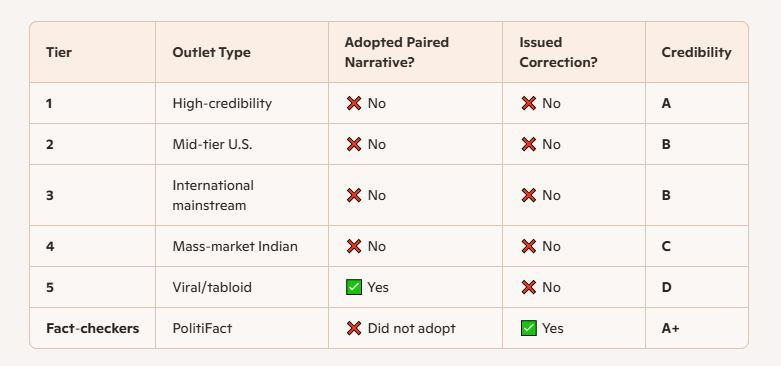
The ONLY organization that has corrected the record.
Explicitly debunked: The “350 foot gash” claim
The pairing of arrests with sabotage
The administration’s shifting damage narrative The lack of evidence for any knife‑cut vandalism
I. A Narrative Without Evidence
WASHINGTON — The administration’s story about alleged sabotage at the National Mall’s Reflecting Pool has evolved into one of the most striking examples of unverified official messaging in recent memory. Over several weeks, officials have repeatedly linked seven arrests, a potential 10‑year federal sentence, and a supposed 350‑foot knife‑cut “gash” in the pool’s surface — a claim that has shifted in length multiple times.
Yet no evidence has been released. No photos. No Park Police reports describing knife marks. No engineering assessments. No measurements. No documentation of a 150‑, 250‑, 300‑, or 350‑foot cut.
Only one organization has corrected the record: PolitiFact.
II. PolitiFact Breaks the Silence
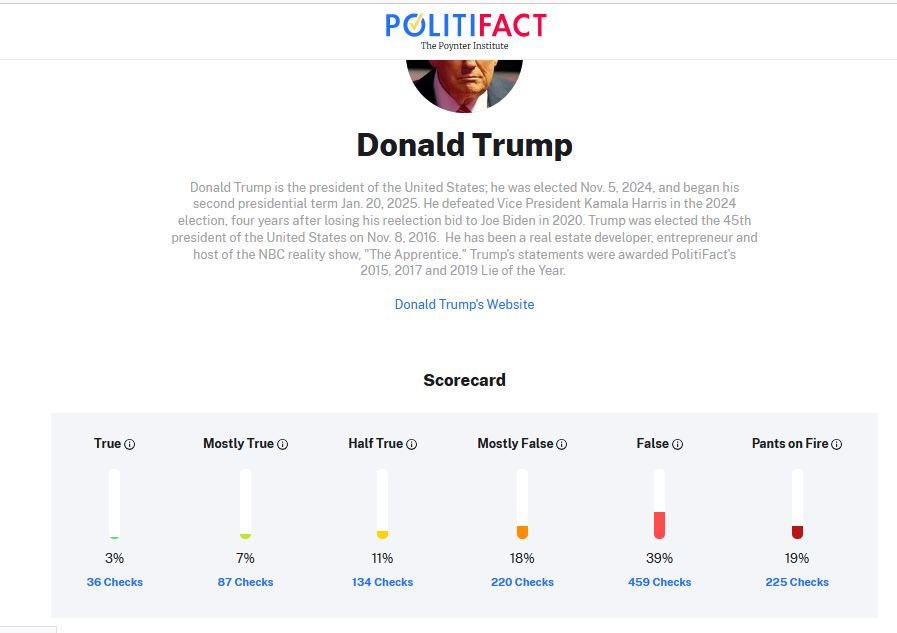
PolitiFact’s analysis is unequivocal: there is no evidence of knife‑cut vandalism of any length. Their review found that the administration’s claims are unsupported by any publicly available documentation, and that the arrests cited by officials do not correspond to acts of sabotage.
One arrest involved a woman who touched peeling paint and removed a loose chip — a detail that later became a visual anchor in online discussions, despite bearing no resemblance to a knife attack. Other arrests were for unrelated conduct, including disorderly behavior and trespassing. None involved blades, tools, or damage to federal property.
PolitiFact also documented how the administration’s narrative has shifted repeatedly, with officials offering different measurements of the alleged gash depending on the venue. The outlet concluded that the story’s evolution “does not align with available evidence.”
In a media landscape where most outlets either repeated the administration’s statements or avoided the story entirely, PolitiFact’s correction stands alone.
III. The IO Tactic Behind the Narrative: Pairing
The administration’s messaging follows a classic information‑operations tactic known as pairing — the deliberate linking of unrelated elements to create a coherent, emotionally charged narrative.
The three paired elements:
Seven arrests
A supposed 350‑foot knife‑cut gash
A threatened 10‑year federal sentence
Individually, each element is ambiguous or unverified. Paired together, they form a compelling story of coordinated sabotage.
This tactic works because audiences tend to assume that items mentioned together are causally connected — even when no evidence supports the link.
IV. Burgum’s Fox News Interview: Pairing in Real Time
The clearest example of pairing occurred during Interior Secretary Doug Burgum’s Fox News interview. In the segment, Burgum:
referenced “lots of cuts” to the Reflecting Pool
immediately followed with “we’ve arrested seven people”
then reinforced the threat of severe penalties
The anchor’s framing amplified the pairing, asking whether the arrests were connected to Trump’s claims of a 300–350‑foot gash. Burgum did not correct the premise. Instead, he leaned into it, saying:
“It’s a shame these people are taking box cutters to it.”
This statement presupposed that:
people were taking box cutters to the pool
the arrested individuals were those people
the alleged cuts were caused by those individuals
None of these claims have been substantiated.
Why this works on television
Television is fast, visual, and emotional. When “cuts” and “arrests” are mentioned in the same breath, viewers subconsciously connect them. The pairing becomes the takeaway, even though the implication is unsupported.
This is textbook IO framing: assert → imply → repeat → let the audience connect the dots.
V. The “Paint‑Chip Woman”: A Visual Anchor
The administration’s narrative gained further traction through a short video clip showing a woman kneeling at the pool’s edge, touching the surface, and possibly removing a loose paint chip worth about fifty cents.
The clip was repeatedly circulated online as if it were evidence of sabotage.
In IO terms, this is a visual anchor — a piece of imagery that audiences latch onto, even when it does not depict the alleged act. The woman’s gesture was benign, but the clip was framed “like a wanted poster,” implying criminal intent.
Why the clip mattered
It provided a face to attach to the narrative.
It created the illusion of evidence.
It allowed commentators to say “we have video,” even though the video did not show vandalism.
It reinforced the pairing: arrest → damage → culprit.
The woman was arrested for touching peeling paint — not cutting anything. But once the clip circulated, the distinction was lost.
VI. How the Narrative Spread
The administration’s claims followed a familiar IO pattern:
Initial assertion — vague references to “significant vandalism.”
Escalation — the alleged damage grew in length and severity.
Pairing — arrests were linked to the supposed gash.
Amplification — Fox News interviews, social media posts, and press briefings repeated the pairing.
Visual anchoring — the “paint‑chip woman” clip became a stand‑in for sabotage.
Threat framing — warnings of 10‑year sentences created urgency and fear.
This pattern transformed minor or unrelated incidents into a narrative of coordinated attack.
VII. The Media’s Uneven Response
Major outlets such as NBC News and Forbes reported the administration’s statements but did not issue corrections. NBC noted that officials provided no evidence, but still repeated the claims. Forbes highlighted inconsistencies but stopped short of debunking.
Other outlets — including MSN syndication, viral news sites, and tabloid‑style aggregators — amplified the narrative without verification, often presenting the alleged gash as fact.
Notably, no mainstream outlet besides PolitiFact has corrected the record.
VIII. The Missing Evidence Problem
The Reflecting Pool is one of the most photographed landmarks in the United States. A 350‑foot knife‑cut gash would be visible from dozens of angles, captured by tourists, joggers, and security cameras. Yet no images have surfaced.
Park Police have not released reports describing knife damage. The National Park Service has not issued statements confirming sabotage. Contractors responsible for recent renovations have not documented structural harm.
The absence of evidence raises a central question: If the damage exists, why has no one seen it?
IX. The Stakes of an Unverified Claim
The administration’s narrative is not merely symbolic. It has been used to justify warnings of severe criminal penalties, frame discussions of domestic unrest, and reinforce claims of rising threats to national monuments.
When unverified claims are paired with real arrests, the public may assume guilt where none exists. When shifting measurements are presented as fact, audiences may perceive a crisis that has not been substantiated. When media outlets repeat official statements without correction, misinformation can calcify into perceived truth.
PolitiFact’s correction is therefore more than a fact‑check — it is a rare instance of institutional pushback against a narrative that has spread widely despite lacking evidence.
X. What Comes Next
The administration has not responded to requests for documentation of the alleged gash. Park Police have not released incident reports confirming knife damage. No engineering assessments have been made public.
Unless officials provide evidence, the narrative remains unverified — and PolitiFact remains the only organization to say so plainly.
In an era where political messaging often outpaces verification, the Reflecting Pool story illustrates how quickly an unsubstantiated claim can become a talking point, and how slowly corrections can follow.
For now, one fact‑checking outlet stands alone.


Comments